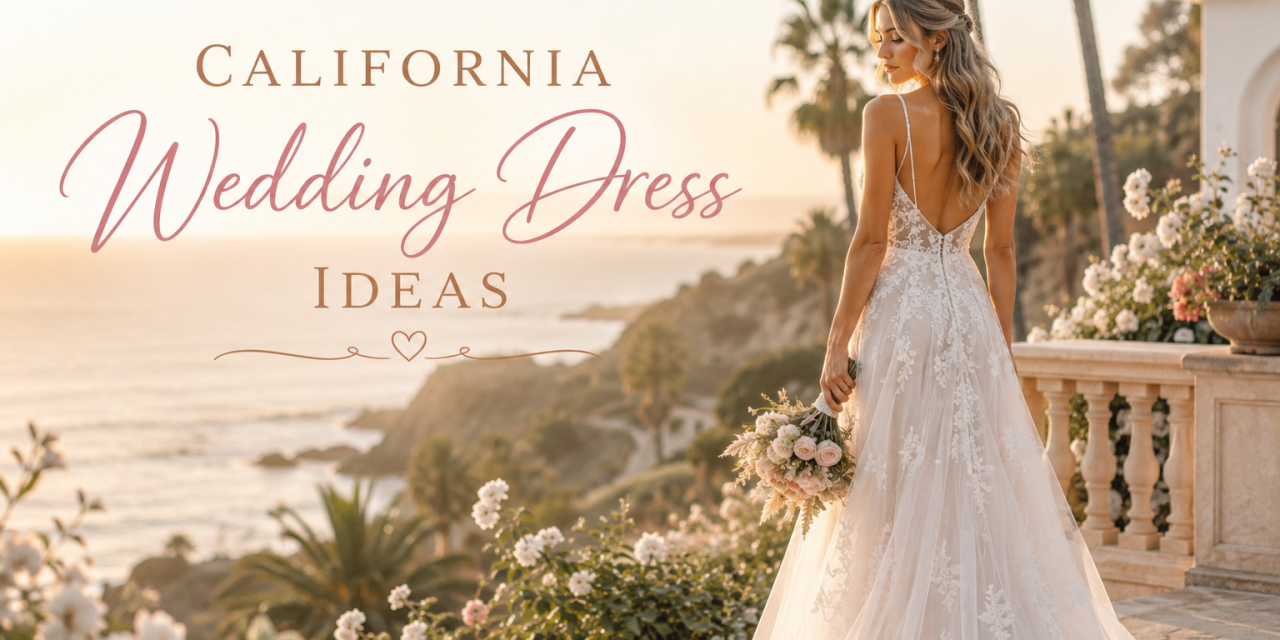
Explore wedding dress ideas written for Southern California light, with a closer look at how fabric, neckline and color can work with the setting. Read the full article for the dress-focused part of your planning.
A California wedding can mean an ocean bluff, a vineyard, a redwood grove or the desert. The setting you choose shapes the season, the light and the dress as much as the guest list does. This page gathers what River West has written for couples marrying in California, with most of it focused on Southern California, and adds the basics to settle early, from choosing a region to finding the marriage license information.
Start with the kind of day you want rather than a photograph of one location. Think about where guests will stay, how they will travel and how much of the celebration will be outdoors. A beautiful setting still needs a practical plan.
Explore wedding dress ideas written for Southern California light, with a closer look at how fabric, neckline and color can work with the setting. Read the full article for the dress-focused part of your planning.
Start with the setting rather than a venue name. Beach and bluff sites need a plan for wind and visibility; vineyards and ranches offer a different backdrop; gardens and estates suit a classic ceremony; and desert settings make temperature and light central questions. Once you know the setting, the regional shortlist becomes more useful: coast, inland valleys, wine country or desert.
Compare guest access alongside the view. Look at travel between accommodation, ceremony and reception, and ask where guests can sit, find shade or move indoors. At an outdoor site, check the practical arrangements for sound, power, bathrooms and catering. Confirm permissions and any restrictions with the venue or responsible authority rather than assuming that a public setting is available for an event.
For how to compare the venues themselves, read How to Choose a Wedding Venue You’ll Never Regret. For details once the setting is chosen, explore the wedding ideas guide. This hub is a starting point for decisions, rather than a ranked venue list or a booking service.
Coastal, countryside and garden imagery from the existing River West library. The images illustrate settings; they are not identified California venues.
Plan the ceremony time around the conditions where you are marrying, and keep a covered or indoor option for any outdoor part of the day. Coastal fog, inland heat, wind and rain are questions to discuss with each venue for the date you are considering; conditions can differ between nearby settings.
Ask how the ceremony space feels at your intended hour, where the shade falls and how guests move between spaces. Think about the temperature after sunset as well as during the ceremony. Confirm the weather backup before arranging furniture or flowers. When choosing attire, the California wedding dress ideas article considers fabric and style in Southern California light.
The California Department of Public Health marriage information page explains the roles of county clerks, marriage officiants and recorders. The county clerk issues marriage licenses. Use the state’s county office directory to find the office relevant to your plans.
Check the county’s current instructions for appointments, identification, license type and fees, and read the state’s officiant information before choosing who conducts the ceremony. If you are considering Orange County, start with its official marriage services page. Confirm your arrangements directly with the appropriate office before the date; this blog does not issue licenses or arrange ceremonies.
Usually it means a celebration that lets the setting inform the decor: coastal, vineyard, garden or desert inspiration, natural light and relaxed formality. There is no fixed rule. Choose details that work for your location and guests rather than trying to reproduce a single look.
It can cover a small wedding when the guest list is short and the venue, food and attire are simple. A backyard or a courthouse ceremony followed by a meal may be formats to investigate. Get current quotes and check permissions before deciding what your own budget can cover.
Start with a marriage license issued by a county clerk and an officiant authorized under state law. Check the state marriage information and your county clerk for requirements, license types, fees and appointments. The official officiant FAQ explains where to check who may conduct the ceremony.