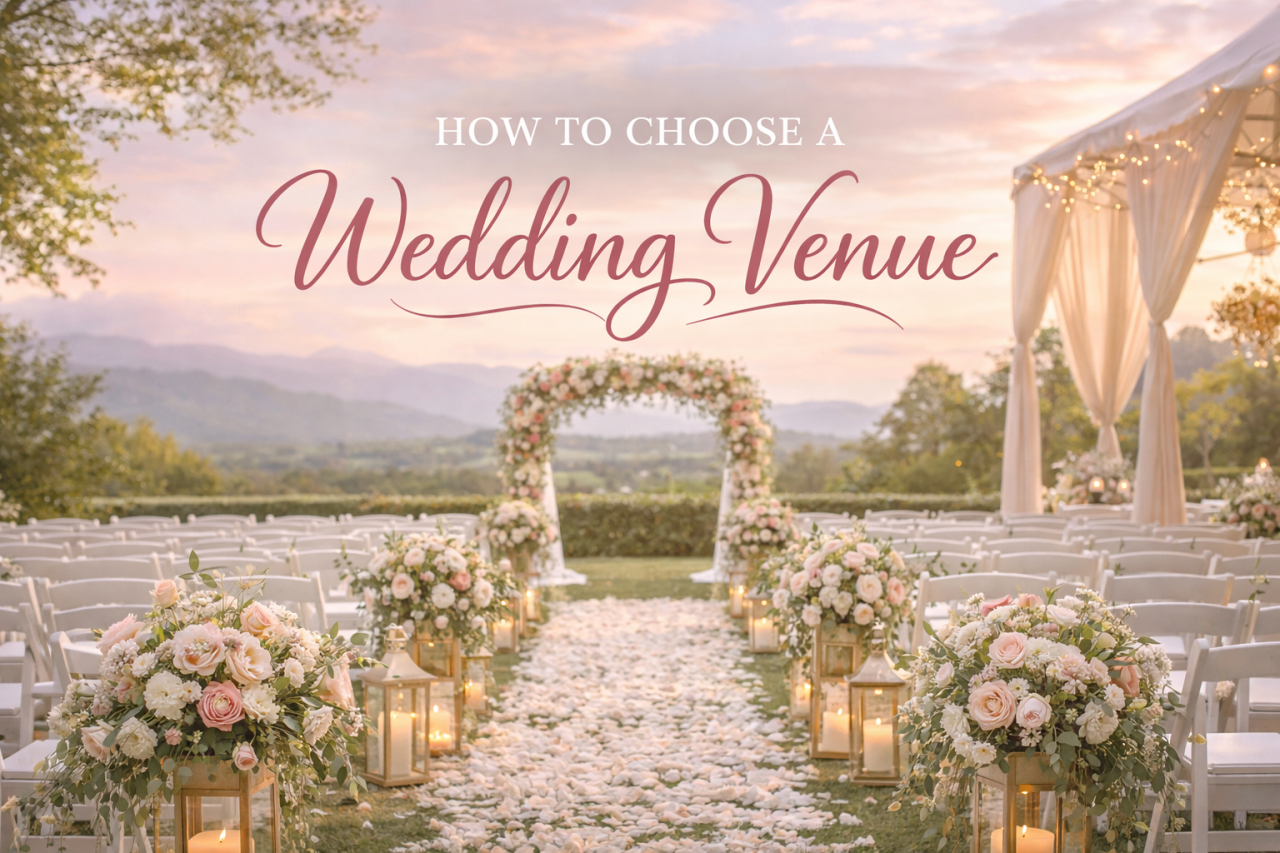
The venue sets the tone for everything — the photos, the flowers, the guest experience, the whole day. It’s often the first major decision you’ll make, and one of the biggest budget items. Here’s how to approach it without losing your mind.
Start with the non-negotiables
Before you fall in love with a barn in the countryside or a rooftop in the city, get clear on the things that can’t be compromised. These will eliminate half your options immediately — which is a good thing.
- Guest count — Know your approximate headcount before touring anything. A venue that holds 80 won’t work for 150.
- Date flexibility — If you have a fixed date, confirm availability early. If you’re flexible, you’ll have more options and often better pricing.
- Budget — Venue costs typically eat 25–35% of a total wedding budget. Set a firm ceiling before you start looking.
- Location — Consider where most guests are traveling from and whether you need nearby accommodation options.
- Indoor vs. outdoor — If you want an outdoor ceremony, make sure there’s a solid backup plan for weather.
The planning timeline
Venues book up faster than almost anything else in wedding planning. Popular spots can be reserved 12 to 18 months out, especially for Saturday dates in peak season.
Research and build a shortlist
Browse venues online, ask recently married friends for recommendations, and use platforms like The Knot or WeddingWire to filter by location, capacity, and style. Aim for a shortlist of five to eight venues to tour.
Schedule tours
Visit in person whenever possible. Photos rarely capture acoustics, natural light, or the feeling of a space. Bring your partner, and if possible, visit at the same time of day your wedding would take place.
Ask the right questions
Don’t leave without asking about catering exclusivity, vendor restrictions, noise ordinances, parking, setup and breakdown windows, and what’s included in the rental fee versus what costs extra.
Compare and decide
Create a simple side-by-side comparison of your top two or three venues. Factor in total cost (including required vendors and fees), gut feeling, and how responsive the venue coordinator has been — that last one matters more than people think.
Review the contract carefully
Read every line before signing. Look for cancellation and rescheduling policies, what happens in case of force majeure, payment schedules, and any clauses about noise, décor restrictions, or end times.
Insider tip
Always ask to see the venue on a day when another wedding or event is set up. Seeing it dressed gives you a far better sense of its potential than an empty room ever will.
Venue styles worth knowing
Different venue types come with very different logistics, costs, and vibes. Think about what fits your vision — and your workload.
Ballroom or hotel
All-inclusive, easy logistics, less personal charm
Barn or farm
Rustic character, often requires more vendor coordination
Garden or estate
Beautiful but weather-dependent — always have a backup
Rooftop or loft
Dramatic views, urban feel, often strict noise curfews
Boat or waterfront
Memorable and unique, limited guest count and accessibility
Historic building
Rich atmosphere, may have décor or vendor restrictions
Hidden costs to watch for
The rental fee is rarely the full story. Before comparing venues on price, make sure you’re comparing apples to apples.
- Required catering minimums — Some venues require you to spend a set amount on food and beverage, regardless of your guest count.
- Service charges and taxes — These can add 25–30% on top of quoted catering prices.
- Preferred vendor lists — Some venues require you to use their approved vendors, which limits your flexibility and can inflate costs.
- Setup and breakdown fees — Extra hours for your florist or caterer to set up before guests arrive can cost significantly more.
- Parking and transportation — Remote venues may require you to arrange and pay for shuttle services.
- Cake cutting and corkage fees — Surprisingly common, and surprisingly expensive.
On contracts
If a venue won’t negotiate on anything — not timing, not inclusions, not payment terms — that rigidity often carries through to the day itself. Flexibility in the planning process is a good sign.
Trust your gut
Spreadsheets and checklists will only get you so far. At the end of the day, you’ll spend one of the most significant days of your life in this space. When you walk in and it just feels right — that matters.
The best venue isn’t the most expensive one or the most Instagrammable one. It’s the one where you can picture your people together, celebrating you.
“The right venue doesn’t just host your wedding — it becomes part of the story you tell for the rest of your lives.”